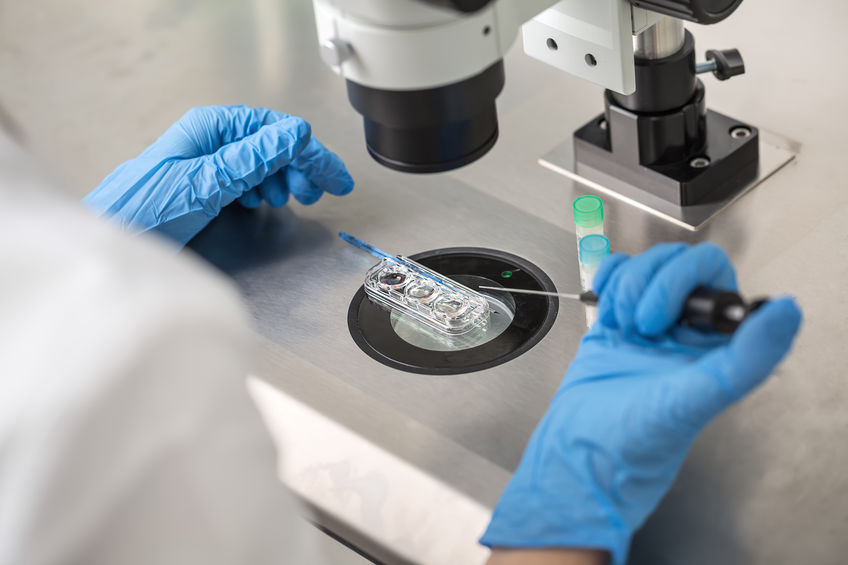
Blastocyst culture
Until about ten years ago, it was impossible to consistently grow (or ‘culture’) embryos in a laboratory to the blastocyst stage. Specialized commercial culture media (the fluid in which embryos are produced in the lab) have now allowed embryos to be successfully nurtured to the blastocyst stage outside of the human body. This is known as ‘blastocyst culture’ in the laboratory.
After the egg retrieval procedure, fertilization is performed in the IVF laboratory using IVF (In-vitro fertilization) or ICSI (intra-cytoplasmic sperm injection), and the resulting embryos are placed in an incubator for the further development. The developmental stages are as follows:
- The day of egg retrieval is referred to as Day 0. (IVF or ICSI is done after egg retrieval)
- On the 1 day, the pronuclear stage (embryologist checks as to how many eggs have successfully fertilized)
- On Day 2, there are two to four cell stages.
- On day 3, there are eight cells.
- On day 4, the morula stage
- On day 5 or 6, the blastocyst stage
Blastocyst Transfer
Blastocyst transfer is a crucial stage in assisted reproductive technology (ART) where embryos developed to the blastocyst stage are transferred into the uterus to facilitate pregnancy. This advanced technique offers numerous benefits over earlier-stage embryo transfer methods.
Once embryos have reached the blastocyst stage, typically around day 5 or 6 following fertilization, they are considered more developmentally advanced. This increased maturity improves the likelihood of successful implantation and pregnancy.
During the blastocyst transfer procedure, carefully selected blastocysts are transferred into the uterus using a thin catheter under ultrasound guidance. This minimally invasive procedure is typically well-tolerated and does not require anesthesia.
The timing of blastocyst transfer is crucial, as it aligns with the natural timing of embryo implantation in a woman’s menstrual cycle. By transferring blastocysts at this optimal stage, the chances of successful implantation and pregnancy are maximized.